
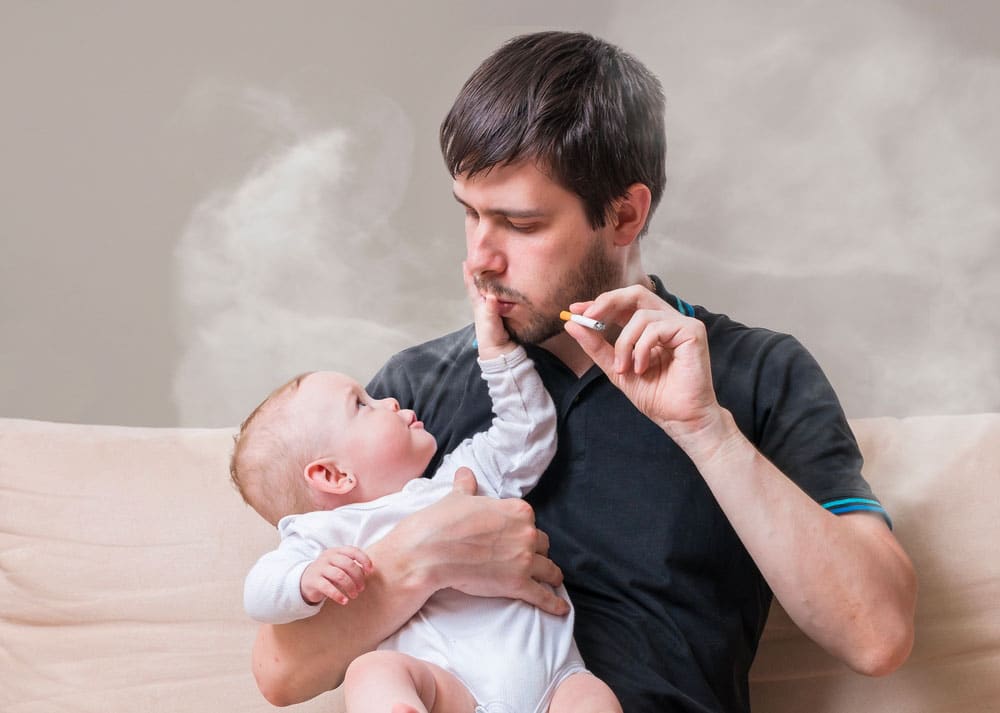
Even today, despite considerable public awareness-raising, passive smoking is a public health problem affecting millions of people. The cause of serious health problems in young children and adults alike, it is particularly dangerous when it takes place in an enclosed space, such as a car or a poorly ventilated home. Many countries around the world, including Saudi Arabia, have passed laws banning smoking in public places, in the workplace and on public transport. But to protect everyone’s health – the smoker’s and those around him – the best thing to do is to do everything you can to stop smoking.
What is passive smoking?
Unintentional but very real tobacco intoxication
Passive smoking is a phenomenon that occurs when a person, whether a smoker or non-smoker, inhales the cigarette smoke of someone smoking in their direct environment. Thanks to the various bans in place, involuntary intoxication is becoming increasingly rare in public places such as bars, restaurants, public transport and government offices, but is still a major problem in private settings.
What are the risks of passive smoking?
Passive smoking causes a great deal of discomfort to those exposed to it, and can lead to serious health problems. It is very dangerous for those close to the smoker, especially children, people with respiratory problems and the elderly. They then suffer all the harmful effects of cigarettes without even having chosen to smoke.
It is sometimes harmful to the smoker himself when he consumes tobacco in a convivial environment, or worse, in a smoking room. As part of this process, he inhales not only the toxic substances from his own cigarette, but also the many chemical substances present in the second-hand smoke, which is more concentrated than that inhaled in the first place, of the smokers around him at the time.
Passive smoking and pregnancy, a special case
During pregnancy, the developing fetus can also fall victim to tobacco intoxication, which can have a serious impact on its health. This may be due to his mother’s continued smoking, exposing him to the toxic substances in her cigarettes, which pass into his bloodstream. It can also be the result of passive smoking by the pregnant woman, if someone around her regularly smokes next to her. Unfortunately, this phenomenon can have repercussions on the baby’s growth, and it’s not uncommon to see babies born lacking nicotine in the first few days of life, as they no longer receive their “dose” via the mother’s blood.
A national guarantee
Our laserOstop centers guarantee free treatment throughout Saudi Arabia.
Practitioners at your service
At your service, 6 days a week
No contraindication
The laserOstop method is a personalized protocol that can be adapted to each individual, with no contraindications.
Discretion & confidentiality
Our laserOstop centers are committed to maintaining the confidentiality of your treatments in order to protect your integrity.
The health risks of passive smoking
Health risks for adults
Regular inhalation of smoke from a smoker’s cigarettes can cause serious health problems for those exposed. The more prolonged and repeated the exposure, the greater the risk. The inconveniences caused by this phenomenon include :
- Respiratory problems: the chemicals in cigarette smoke can lead to recurrent coughing, asthma, chronic obstructive pulmonary disease (COPD), and increased bronchial and ENT infections.
- Heart and vascular diseases: as with smokers, passive smoking increases the risk of developing cardiovascular diseases such as angina pectoris, myocardial infarction, stroke and high blood pressure.
- Cancers: inhalation of smoke from tobacco combustion multiplies the risk of developing lung cancer, as well as bladder, stomach, throat and other cancers. Passive smoking and cancer are therefore closely linked.
- Various troublesome symptoms: headaches, dizziness, nausea, increased fatigue.
Health risks for children and infants
Children are particularly vulnerable to the harmful effects of tobacco, as their immune systems are still immature. What’s more, their rapid growth requires a lot of resources, making it harder for the organization to mobilize them in the fight against passive smoking. Children exposed to it may experience growth problems, concentration and learning difficulties, and respiratory problems that would not otherwise occur.
Risks to the baby's health before birth
Tobacco intoxication in utero, whether due to active or passive smoking by the mother, can have serious consequences for fetal development. Exposing the unborn child to the toxic substances released by cigarettes increases the risk of miscarriage, growth disorders and low birth weight. The risk of cot death is also increased in the months following birth.
The likelihood of developing attention or behavioral problems is also higher, as is the decline in cognitive ability. Lastly, as in the case of adults and children, the occurrence of respiratory problems increases, even if the respiratory tract has not been directly exposed to smoke. However, stopping all inhalation of cigarette smoke during pregnancy can drastically reduce all these risks, if problems have not yet appeared.
Passive smoking: what does the law say in Saudi Arabia?
Here are some of the anti-smoking regulations in Saudi Arabia in public places:
- Prohibition of smoking in enclosed public places: It is generally prohibited to smoke in enclosed public places such as restaurants, shopping malls, public transportation, offices, etc.
- Designated smoking areas: Some establishments may have designated areas for smokers, but it is important to respect these specific zones.
- Prohibition of smoking in public transportation: Smoking is prohibited in public transportation, including buses and metro stations.
- Prohibition of smoking in areas frequented by children: Smoking may be prohibited in children’s play areas, public parks, schools, and similar zones.
- Restricted tobacco advertising: Tobacco advertising may be subject to restrictions in terms of location and content.
It is important to note that laws may evolve, and it is recommended to consult official sources or local authorities to obtain the latest information on anti-smoking laws in Saudi Arabia.
Would you like to know more about the laserOstop method for quitting smoking?
Then make an appointment at your nearest laserostop center.
How can we combat passive smoking in Saudi Arabia?
- Strengthen and Enforce Smoking Bans:
- Ensure strict enforcement of existing smoking bans in public places, including restaurants, malls, public transportation, and educational institutions.
- Consider expanding smoke-free zones to cover a broader range of public areas.
- Public Awareness Campaigns:
- Launch comprehensive public awareness campaigns to educate the public about the dangers of passive smoking and the benefits of smoke-free environments.
- Utilize various media channels, including television, radio, social media, and print, to reach a wide audience.
- Education Programs:
- Implement educational programs in schools to inform students about the risks of smoking and passive smoking.
- Include information on the impact of passive smoking on children’s health to encourage parents to adopt smoke-free habits at home.
- Support for Smoking Cessation:
- Provide resources and support for individuals who want to quit smoking. Smoking cessation programs can be made widely available in healthcare facilities and community centers.
- Encourage employers to offer smoking cessation programs for employees.
- Increased Taxes on Tobacco:
- Consider increasing taxes on tobacco products, which has been shown to be an effective method for reducing smoking rates.
- Higher prices can discourage people from smoking and may also contribute to reducing exposure to passive smoke.
- Strict Regulation of Tobacco Advertising:
- Implement strict regulations on tobacco advertising to prevent the promotion of smoking, especially to young people.
- Restricting the visibility of tobacco products can contribute to changing societal attitudes towards smoking.
- Smoke-Free Initiatives in Workplaces:
- Encourage and support companies in establishing smoke-free policies in the workplace.
- Provide incentives for companies that promote a healthy and smoke-free environment.
- Community Engagement:
- Engage communities in anti-smoking initiatives, encouraging residents to support and participate in smoke-free campaigns.
- Establish community support groups for those attempting to quit smoking.
- Regular Monitoring and Evaluation:
- Implement regular monitoring and evaluation of anti-smoking initiatives to assess their effectiveness.
- Adjust strategies based on the outcomes of evaluations.
- International Collaboration:
- Collaborate with international organizations and public health agencies to share best practices and gather support for anti-smoking initiatives.
The best way to combat passive smoking is to stop smoking!
Finding the motivation within yourself to start smoking cessation
Quitting smoking can be difficult, especially if you started a long time ago. It’s a vital decision, not only to improve your health and that of those around you, but also to regain a better quality of life and increase your purchasing power. There are a few tricks you can use to strengthen your resolve:
- List the various benefits of quitting smoking: health benefits, healthier breath, better skin and hair, money saved, protecting your loved ones from passive smoking, etc.
- Set yourself clear, realistic goals: rather than considering quitting cold turkey, you can try a gradual phase-out. You can also do the opposite if, on the contrary, maintaining a low level of tobacco consumption is more difficult for you than quitting altogether.
- Tell your family and friends about your project, and don’t hesitate to ask for their help and support. You can also take part in discussion groups with other people going through the same process as you.
- Consider activities that will help you think less about cigarettes, if possible things that offer physical and psychological health benefits, such as sport or meditation.
- Don’t forget that while relapse is likely, it’s also possible to pull yourself together and resume withdrawal, sometimes by learning new things about yourself. It’s easy to stumble and get up again!
- Make the most of every step forward. For example, give yourself a reward (restaurant, gift, etc.) when you’ve managed not to smoke for a week, a month, a quarter, etc.
The laserOstop method to give up smoking with greater peace of mind!
What is the laserOstop method?
LaserOstop is a drug- and chemical-free method of smoking cessation that uses a laser that works by photobiomodulation. This technique has been used for over thirty years, and has the advantage of being effective, non-invasive and completely painless. It makes it possible to quit smoking gently, without weight gain, mood disorders or side effects.
To achieve this, the laserOstop practitioner stimulates various reflex points located on the auricle to act on the areas of the nervous system that regulate tobacco addiction in general and nicotine addiction in particular. This technique addresses the physical causes of addiction, as well as altering the smoker’s sense of smell and taste. In this way, we can influence the main mechanisms behind the failures often observed in attempts to quit smoking.
An effective method, even for people who have already suffered a relapse
The laserOstop method is suitable for anyone who wants to stop smoking, including those who have already tried smoking cessation without success and then relapsed. This high-performance anti-smoking laser offers targeted action and requires just one one-hour session to achieve its objective. And if, despite everything, you relapse within 12 months, you can benefit from another free session to get back on track. Hundreds of thousands of smokers in Europe have already quit successfully and painlessly thanks to the laserOstop method. They’re just waiting for you to join them!