
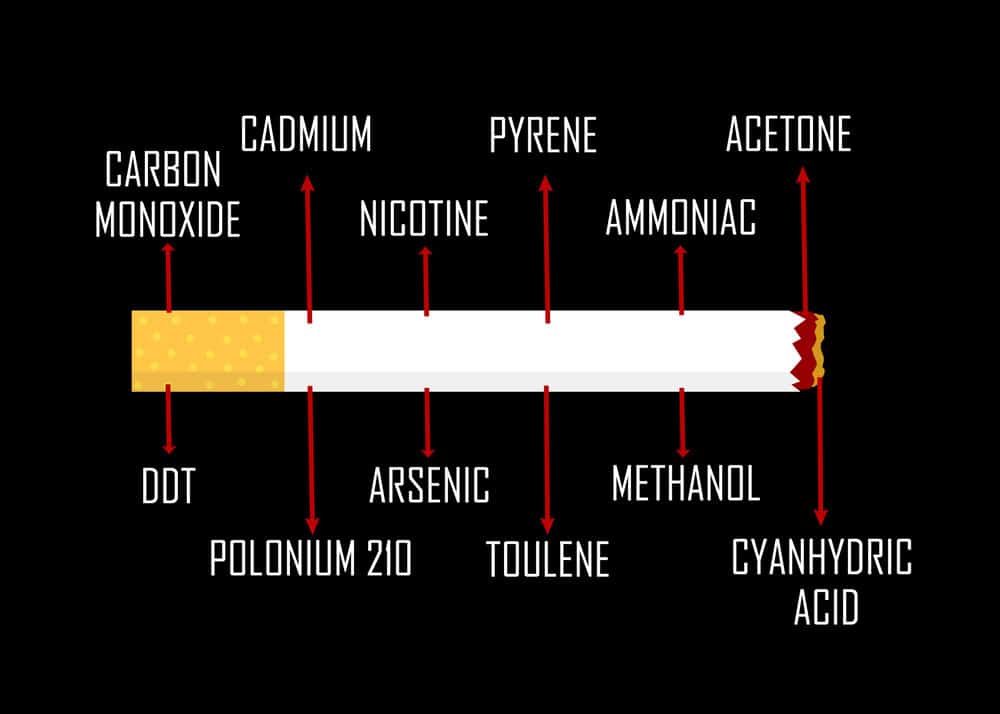
Cigarette chemicals and their harmful effects
Cigarettes are a veritable chemical cocktail, containing over 4,000 different substances, some of which are extremely harmful to the body. While many of tobacco’s chemical components are naturally present in the plant, others only appear during combustion when you smoke. Finally, the industry does not hesitate to add various potentially harmful molecules. Find out in this article which components in cigarettes pose the greatest health risks.
Cigarette chemicals naturally present in tobacco
Like all plants, tobacco naturally contains chemical molecules that are found after harvesting. Among them are the following two.
Nicotine
The best-known chemical component of tobacco is undoubtedly nicotine. While not particularly harmful to the body, it is responsible for cigarette addiction. Acting on the brain and certain nervous system receptors, it’s what gets you hooked.
Over the years, tobacco industry manufacturers have developed cigarettes with increasingly high nicotine levels. And the more nicotine you smoke, the stronger the addiction becomes.
Arsenic
Known for its particularly toxic action, arsenic is a famous poison found, for example, in rat poison. Although tobacco plants don’t contain it in nature, they quickly become impregnated with it after exposure to the insecticides and pesticides used to protect them from their aggressors. Since there are few brands of organic tobacco, most of the cigarettes you smoke will contain it.
Chemical components resulting from tobacco combustion
When a cigarette is smoked, the combined action of heat and oxygen causes a chemical reaction that transforms tobacco molecules into other compounds. Many of them are highly hazardous to health and potentially carcinogenic.
Ammonia
Cigarette smoke is rich in ammonia, a chemical component found in many detergents and disinfectants. Particularly harmful in its own right, it also contributes to greater absorption of nicotine by the body, thereby increasing the smoker’s risk of addiction.
Benzene
Benzene is a volatile molecule found in gasoline, certain types of glue and many pesticides. Released when tobacco is burned, it penetrates cells, where it is capable of modifying DNA, promoting the development of cancer.
A national guarantee
Our laserOstop centers guarantee free treatment throughout Saudi Arabia.
Practitioners at your service
At your service, 6 days a week
No contraindication
The laserOstop method is a personalized protocol that can be adapted to each individual, with no contraindications.
Discretion & confidentiality
Our laserOstop centers are committed to maintaining the confidentiality of your treatments in order to protect your integrity.
Cadmium
Cadmium is a highly toxic heavy metal. Usually found in vehicle batteries or dyes, it is responsible for serious lung damage. It also causes smokers’ teeth to turn yellow and their sense of taste and smell to diminish. Other toxic metals such as beryllium, chromium and bromine are also generated by cigarette combustion.
Hydrogen cyanide
Its name immediately evokes poison. Hydrogen cyanide is normally found in pesticides and plastics, but also in your daily cigarette. When inhaled, it causes severe damage to the respiratory tract and increases the risk of bronchial infection.
Formaldehyde
Formaldehyde, commonly known as formalin, is highly carcinogenic. In particular, it is responsible for many cases of leukemia.
Tar
The main constituent of road surfaces, tar is also released when tobacco is burned. Once inhaled, it sticks to the walls of the pulmonary alveoli, leaving black deposits that prevent the proper exchange of oxygen and carbon dioxide. A carcinogen, it also turns smokers’ teeth yellow.
Carbon monoxide
Carbon monoxide prevents red blood cells from carrying oxygen to the body’s muscles and organs. It causes asphyxiation in people exposed to fire fumes or exhaust gases in a confined space. This molecule has serious repercussions on the health of the smoker’s heart, brain and muscles, as well as on the foetus of pregnant women who inhale it.
Nitrous oxide
Responsible for the greenhouse effect, nitrogen oxide generated by tobacco combustion causes lung irritation. It is partly responsible for smokers’ breathing difficulties and long-term physical limitations.
Chemicals added by manufacturers
For reasons of stability, taste, reduction of the unpleasant effects of tobacco (irritation caused by smoke, for example) or preservation, manufacturers add chemical substances to cigarettes.
Many of these compounds have health implications. By enhancing the smoker’s experience, they have the disadvantage of reinforcing the pleasure of smoking, and therefore the addiction. What’s more, exposure to the heat generated by combustion leads to the formation of new chemical compounds, often harmful to the body.
Stop the chemicals in cigarettes: quit smoking!
In all, almost 50 toxic substances enter your body every time you light up a cigarette. Present in smoke, they are also inhaled by those around you who are exposed to them. To avoid the risk of developing serious pathologies as a result of their consumption, it is urgent to stop smoking.
LaserOstop® therapy is a highly effective smoking cessation solution, with no side effects and no weight gain. Effective from the very first session, it has a high success rate 1 year after the initial treatment, whereas hypnosis, acupuncture or the use of nicotine substitutes are only effective in around 40% of cases. Specialized laserOstop® centers welcome you in Saudi Arabia to support you in your desire to quit smoking and put an end to the gradual poisoning it causes.